Your operation requires consistent cleaning schedules customized for unique hazards, processing volumes, food allergens, and regulatory visits, with auditable records validating HACCP requirements, inspection compliance, and health department standards. The information following give details about essential cleaning protocols.
Essential Summary
- Food safety cleaning experts in Brampton cater to restaurants, grocery departments, commissaries, warehouses, bakeries, schools, mobile vendors, and allergen-sensitive operations.
- Frequently contacted areas, food-contact equipment, kitchens, floors, drains, restrooms, and storage areas are sanitized using sectional methods to reduce cross-contamination.
- Certified specialists validate proper chemical concentration, appropriateness, and exposure duration, then file finalization with samples, reviews, and correction logs.
- Optimal sanitation calendars consider hazard, throughput, format changes, releases, and requirements when allocating routine, periodic, and annual operations by section.
- Coverage, color-categorized equipment, hazard analysis knowledge, public-health competency, safety training preparation, endorsements, and audit-ready sanitation documentation are essential supplier traits.
What Brampton Establishments Require Food Safety Cleaning?
Any Brampton facility that handles, stores, prepares, packages, or serves food needs hygiene cleaning. You must follow it if your operation falls under public health inspection, food premises regulations, or internal HACCP-based controls. That requirement covers restaurants, cafeterias, commissaries, grocery food departments, butcher shops, seafood counters, convenience stores, and institutional kitchens.
You'll also need compliant food safety cleaning in distribution warehouses, production plants, frozen storage areas, commercial bakeries, educational meal programs, banquet venues, and food delivery services. Mobile and temporary businesses apply too, examples being mobile kitchens, market vendors, and seasonal booths. Should your workers process ingredients, portion ready-to-eat items, reheat products, or store allergens, your establishment requires documented cleaning protocols. In Brampton, sanitation stays mandatory; it constitutes legal, operational, and consumer protection compliance.
What Do Brampton Cleaning Professionals Handle?
Professional cleaning teams specializing in Brampton disinfect high-contact surfaces, kitchen facilities, ground surfaces, and sanitary facilities in compliance with food safety regulations. Focus on these locations stems from extreme cross-contamination risk, injury hazards, and possible regulatory violations.
If you grasp what they sanitize, you'll successfully ensure your facility meets all operational and regulatory compliance needs.
Critical High-Touch Surface Sanitizing
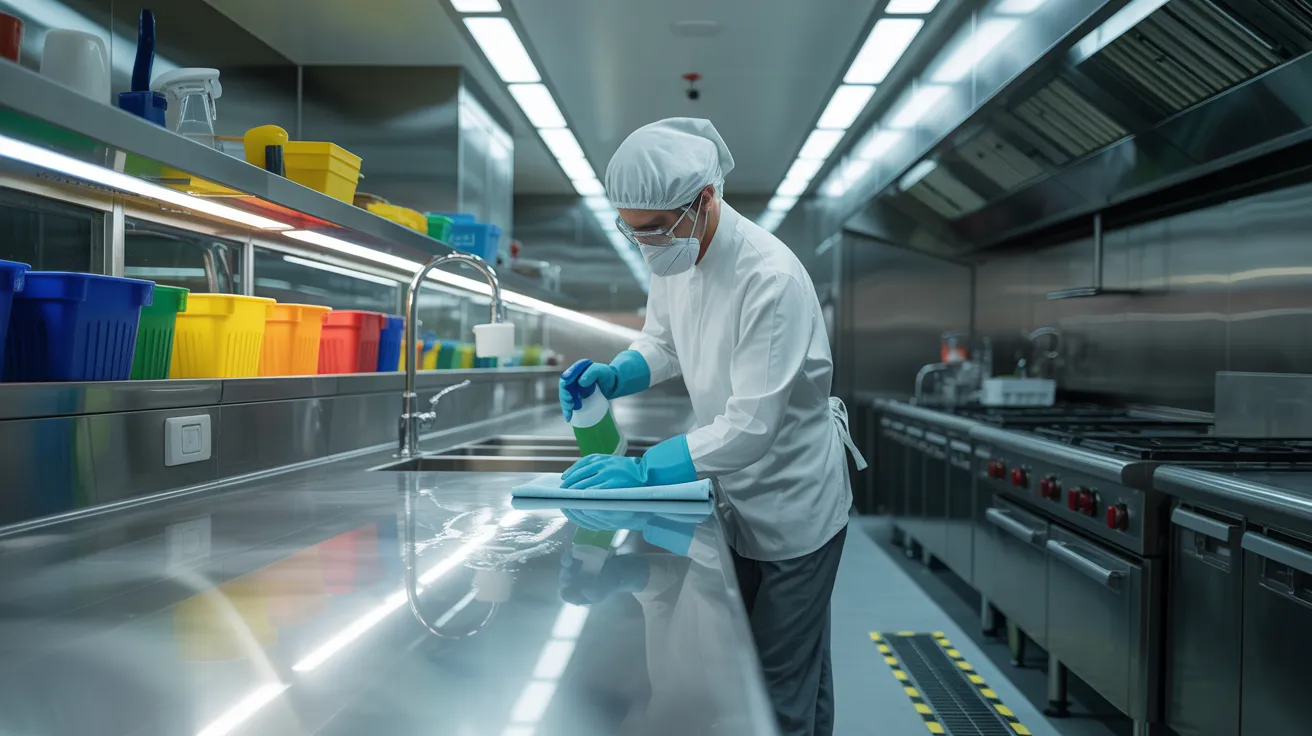
Brampton sanitation experts prioritize high-touch surface cleaning because these frequently handled surfaces can distribute bacteria, viruses, and food residue throughout a establishment. You must have a scheduling system for sanitizing all high-touch items including handles, plates, switches, railings, control surfaces, POS systems, and refrigeration equipment. Using contact point analysis, specialists determine every commonly touched surface and establish cleaning timing
product directions and industry regulations to maintain desired results. Technicians may use swab testing to validate sterilization efficacy
Kitchen Areas, Floor Surfaces, and Bathroom Spaces
Expect Brampton cleaning experts to target kitchens, floors, and restrooms because each area carries distinct foodborne illness prevention, slip-and-fall, and sanitation risks. In industrial kitchens, you need degreasing on cook lines, equipment exteriors, drains, prep surfaces, and splash zones to minimize contamination and pest pressure.
Documented floor care is also provided as part of the service.
For restroom sanitation, cleaners disinfect high-touch surfaces, bathroom fixtures, stall dividers, supply dispensers, and trash receptacles, then replenish amenities and manage odor. They also maintain restaurant cleaning supply rooms where product storage, sink cleanliness, and drain systems impact daily sanitation standards and worker protection.
Why Food Safety Cleaning Matters in Brampton
Brampton businesses need to implement proper sanitation practices for satisfying health code requirements and passing inspections. You also reduce bacterial spread through proper cleaning of food-preparation surfaces, appliances, and frequently-touched items. Most importantly, you help protect public health by lowering the risk of foodborne illness in your facility.
Sanitary Standards Adherence
Since Brampton food operations must follow mandatory safety protocols, your food safety cleaning directly determines your capability to fulfill health codes, defend diners, and avoid regulatory penalties. You must maintain sanitized food contact points, verifiable cleaning logs, appropriate product handling, and documented employee protocols that align with municipal and provincial inspection expectations.
When cleaning standards slip, notices, corrective directives, brand harm, and operational disruption from follow-up inspections or compliance reviews become dangers.
Cross-Contamination Prevention
Maintaining regulatory compliance copyrights on your capacity to prevent cross-contamination during daily food handling and cleaning. You need to partition uncooked items from finished dishes, sterilize work zones between assignments, and position cleaning agents away from food surfaces. Explicit protocols lower contamination threats and support consistent compliance during inspections.
You could implement allergen segregation to prevent priority allergens from contacting shared surfaces, containers, or equipment. Apply separate boards, color-marked equipment, and strict utensil labeling so team members avoid blending products throughout cooking or delivery. Mandate handwashing after handling raw meat, seafood, eggs, or allergen-containing products. Swap cleaning rags frequently, and check sanitizer strength with test strips. When you train staff to follow these controls each shift, you develop a more sanitary, secure business that matches Brampton's safety requirements daily.
Public Health Protection
Should cleaning standards collapse, you don't simply encounter inspection problems—you expand the odds of foodborne illness impacting customers, staff, and the wider Brampton population. You also weaken your role in protecting public health, especially in busy food facilities where pathogens travel quickly through surfaces, equipment, and touchpoints.
You must implement cleaning procedures that eliminate contaminants, effectively sanitize, and verify results. This entails adhering to exposure times, deploying approved disinfectants, recording schedules, and coaching staff to meet compliance standards. These actions support disease prevention by reducing microbes before affecting food surfaces or hands. In Brampton, effective cleaning protects at-risk groups, curtails outbreak likelihood, view this guide and proves your diligence. When you maintain standards, you go beyond regulations—you meaningfully lower danger and promote secure food service across the region.
How Does Cleaning Support Food Safety Compliance?
Upholding thorough cleaning protocols enhances food safety compliance by minimizing contamination hazards, preventing pathogen multiplication, and positioning your facility in accordance with sanitation requirements under HACCP-based programs and public health regulations. You ensure that product-contact areas appear visibly clean and microbiologically controlled, facilitating documented preventive controls and inspection readiness.
Cleaning programs additionally upgrade allergen management by clearing residues that can cause undeclared allergen exposure.
When Do You Plan Commercial Cleaning?
You'll achieve the best results from cleaning routines that account for risk levels, output volume, and legal mandates rather than a unchanging calendar system alone.
monthly schedules for drain systems, vents, storage racks, and hard-to-reach zones, based on inspection data and sanitation documentation.
What Should You Look For in Brampton Cleaning Experts?
Start by screening providers against food sanitation standards, not price alone. You should verify that each company understands CFIA, public health, and HACCP compliance standards relevant to your facility. Ask for proof of insurance, WHMIS compliance, documented staff training, and supervision practices. Review whether technicians understand cross-contamination risks, chemical handling, and traceable sanitation records.
You must also evaluate business consistency and oversight. Seek references from Brampton food companies, then assess response times, corrective-action procedures, and communication standards. Ensure the company enables supplier checks and can provide inspection-ready documentation when authorities or third parties demand verification. Verify equipment is maintained, color-coded items are deployed correctly, and operational-specific risks are understood. A qualified provider protects compliance, product safety, and your brand reputation.
What's covered in a sanitation cleaning strategy?
Document a framework that defines every sanitation activity, guideline, and role before production begins. You should record cleaning schedules, approved products, ratios, contact periods, tools, and validation approaches for each area, surface, and device. Remember to add pre-operational inspections, corrective actions, and employee training requirements.
Your plan should also focus on contamination prevention controls, waste handling procedures, pest management measures, and written schedules for restrooms, drains, floors, and food-contact areas. Describe how you'll separate raw and ready-to-eat processes, support ingredient tracking, and ensure accurate allergen labeling through validated cleaning between product changes. You should set accountability, maintain signed records, and review results against regulatory standards, HACCP controls, and customer requirements. When gaps appear, update procedures immediately and retrain staff.
Regular Asked Questions
Are sanitation providers offered for nighttime operations in Brampton properties?
If you run regulated facilities, you'll also need records that enable audits and ensure compliance.
Can Brampton cleaning experts manage emergency spill response?
Yes, you can find many Brampton sanitation experts offering emergency response options. They manage hazardous materials, evaluate risks, contain affected areas, and perform swift decontamination to reduce exposure and limit operational impact. You should verify response times, certifications, protocols, and procedures. If your facility must meet standards, choose a service that documents incidents, follows procedures, and supports audits.
Can environmentally safe disinfectants be utilized safely on food-contact surfaces?
In essence, plant-based sanitizers remain safe for food-contact surfaces provided you select disinfectants approved for food contact that adhere to compliance requirements. Check contact times, mixing proportions, and rinse procedures ahead of deployment. Botanical formulations reduce toxic chemical contact, although you should obtain evidence of effectiveness against relevant pathogens. To ensure surfaces without residue, implement manufacturer directions precisely and ensure the sanitizer complies with food industry regulations.
Can maintenance plans be tailored for seasonal variations?
Without question, cleaning schedules are highly adaptable for seasonal variations. Adapt intervals, staff levels, cleaning agents, and validation steps to correspond to operational cycles while preserving regulatory adherence. Minimize operational delays by organizing sanitation surrounding changeovers, high demand periods, and usage cycles. Further modify procedural documents, instruction programs, and monitoring protocols to capture periodic risks, additional allergens, or higher contamination levels. Consistent reviews keep the strategy current.
Are commercial cleaners offering staff training on sanitation best practices?
Yes, commercial cleaners often train your staff on sanitation best practices. You get employee instruction on correct chemical application, exposure periods, contamination control, equipment disassembly, and documentation. They typically align training with HACCP, GMP, and CFIA or regional health department requirements. Many perform sanitation audits to confirm adherence, identify gaps, and reinforce corrective actions. This allows you to maintain consistent procedures, pass inspections, and minimize contamination hazards regularly.
Closing Remarks
By collaborating with Brampton commercial cleaning and food safety experts, you aren't just organizing—you keep your operation compliance-focused and your standards up to code. From kitchens to processing floors, every clean surface and maintained corner reduces pest risk and avoids expensive losses. By scheduling cleanings on the right schedule and adhering to a systematic cleaning protocol, you secure your team, clients, and your standing. In a heavily controlled environment, hygienic conditions are mandatory—they're key to business compliance.